$125
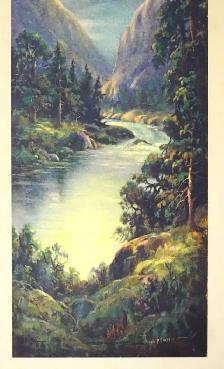
Mid-Century Lithograph 'From the Mountain to the Sea' (OTTAWA)
Description
Rare Mid-Century Canadian Lithograph "From the Mountain to the Sea" Custom Float-Framed by Thomas Studio, Ottawa (Glebe)
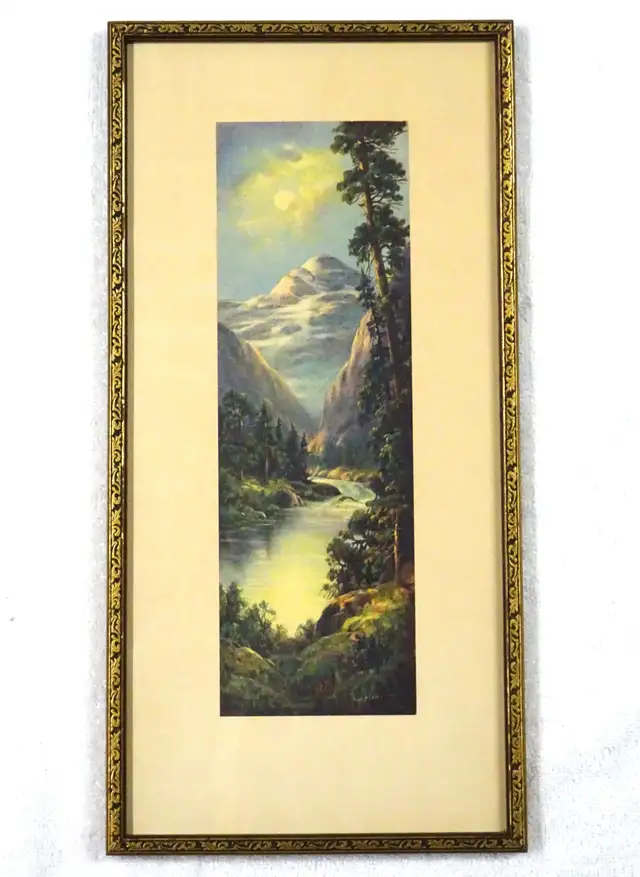
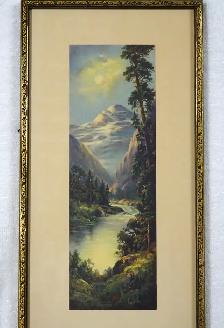
This is an authentic, premium open-edition, and beautifully preserved 1952 full-colour lithograph titled "From the Mountain to the Sea" by the artist Thompson.¹ This piece is a stunning example of mid-century Canadian decorative art, heavily inspired by the Group of Seven style. It features a dramatic vertical landscape composition depicting a snow-capped mountain towering over a rushing river. The artist composed this scene vertically to capture the towering scale of the Canadian landscape. Placing very tall pine trees in the foreground of a narrow 10” x 3¼” lithograph was a brilliant compositional trick. The trees guide the viewer's eye upward, emphasizing the vast height of the snow-capped peak stretching into the sky.
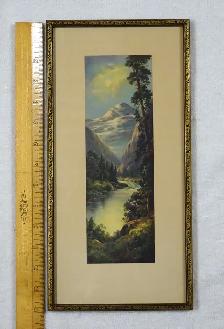
This rare lithograph is housed in its beautiful, period-correct slim 14”H x 6¾”W wood moulding frame featuring an elegant, embossed scrollwork swirl design. The frame retains its authentic original gold gilt finish, showcasing a beautiful, age-appropriate metallic patina with subtle tarnish and weathering that highlights the intricate details of the moulding. The frame is structurally sound and complements the full-colour lithograph inside. A 14” tall, narrow frame was specifically styled to hang on slim wall columns, creating a distinct, elegant, vertical format that took up very little horizontal space. It was highly specialized designed to make a small, delicate image stand out on a wall.
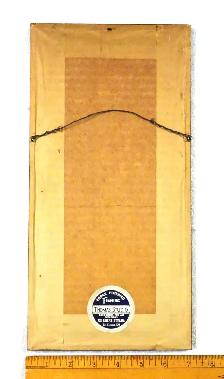
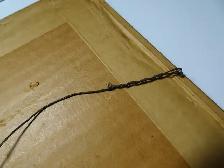
The artwork and frame are in excellent vintage condition. The original glass, backing paper and historical sticker are fully intact, and the lithograph colours remain bright. It has its original eye-hooks and wire. Although the artwork has been sealed for 74 years, the materials inside the frame have interacted causing the glass have some hazy areas.
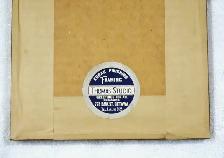
The reverse of the frame features its original, intact paper backing seal with the historic Thomas Studio² gallery sticker. Located at 778 Bank St. in the Glebe, the crisp sticker features the vintage Ottawa central office telephone exchange format: TEL. Carling 3125.³
The artwork was custom framed using an elegant ‘float-mount’⁴ (tipped-on) technique. The lithograph is laid flat on top of the textured beige backing paper rather than hidden behind a standard mat board window, leaving its original edges and tiny printed text fully visible. Most likely, wheat or rice starch paste with fine paper strips were used to hang the lithograph from its top edge, allowing it to hang freely behind the glass.
It is a fantastic example of mid-century Canadian interior design and a wonderful window into Ottawa's historic retail landscape in the Glebe. The vivid colours of the Thompson landscape have been beautifully preserved away from exposure to smoke and air by keeping it totally sealed and unaltered.
"From the Mountain to the Sea" is a fully documented, localized historical artifact - a perfectly preserved time capsule from a bygone era of the Glebe.
Offered for $125 from a smoke-free home in the Taunton and Garden area of WHITBY.
Please email: mzm@sympatico.ca OR Text 905-439-4640
¹ William M. Thompson (1893–1967), was a highly prolific American commercial and landscape artist. While he frequently used his full name or initials, this ‘THOMPSON’ white paint matrix signature, (signed in the plate), came through when the full-colour lithograph was printed. Thompson was one of the premier landscape artists contracted by the printing company ‘Gerlach Barklow’⁶ during the 1940s to the early-1950s.
² Thomas Studio marketed "Greetings for All Occasions" branding means these pieces specifically as high-quality, readymade gifts. Instead of just buying a standard paper greeting card for a wedding, retirement, or anniversary, patrons could purchase a piece of framed artwork complete with the studio's seal of authenticity.
³ The historical phone number format "TEL. Carling 3125" utilizes the old central office exchange system. Before modern all-number dialing took over in the late 1950s, callers dialed the first two letters of an exchange name followed by numbers (e.g., CArling-3125, which translates to 22-3125). Seven digit numbers began in Ottawa in 1953. This artwork was framed right at the twilight of Ottawa’s four-digit telephone era.
⁴ ‘Float-mounted’ lithograph has been placed on top of the beige backing paper, not mounted behind a mat board. The entire print is laid flush on top of the beige paper backer, leaving its original edges fully visible to create depth. Tipping a print directly onto a textured or coloured backing paper was typically reserved for higher-quality lithographs.
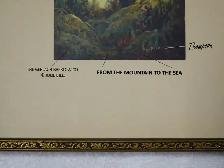
⁵ The tiny text ("From the Mountain to the Sea") was added to the margins by the commercial printing house during the production run. Because it is incredibly small and lacks formal copyright numbers, publisher hallmarks, or registry notes, it indicates this was a curated, decorative open-edition lithograph. It was meant to look clean, elegant, and uninterrupted so it could be showcased using high-end framing methods. Thomas Studio chose not to cover the small details with a mat board.
⁶ THE GERLACH-BARKLOW CO.© JOLIET, ILL. (tiny print, lower left) printed "From the Mountain to the Sea" in Illinois, then it was imported into Canada and custom-framed by Thomas Studio as luxury home décor during Ottawa's post-war boom.
When you call, please mention you found this ad on OKZ.ca
$125
Mid-Century Lithograph 'From the Mountain to the Sea' (OTTAWA)

MZM
Email Verified
Apr 2018
Member Since
14
Listings
~2 hrs
Response
Safety Tips
- Meet in a public place
- Never send money in advance
- Inspect item before paying
- Trust your instincts